
By Technology
Industrial Automation & Material Handling Technologies
Browse the systems Steel Square can integrate, service, repair, modify and support. Each connects the equipment to the industries that use it and the work performed around it.
What brings you here
Automation & Material Handling System Families
- A machine is down and you know the system involved
- Controls, a PLC or an HMI are the problem
- You need pallet handling or pallet equipment
- Material is backing up on a conveyor or line
- An aging system is getting hard to support
01 / 07
ASRS & Automated Storage
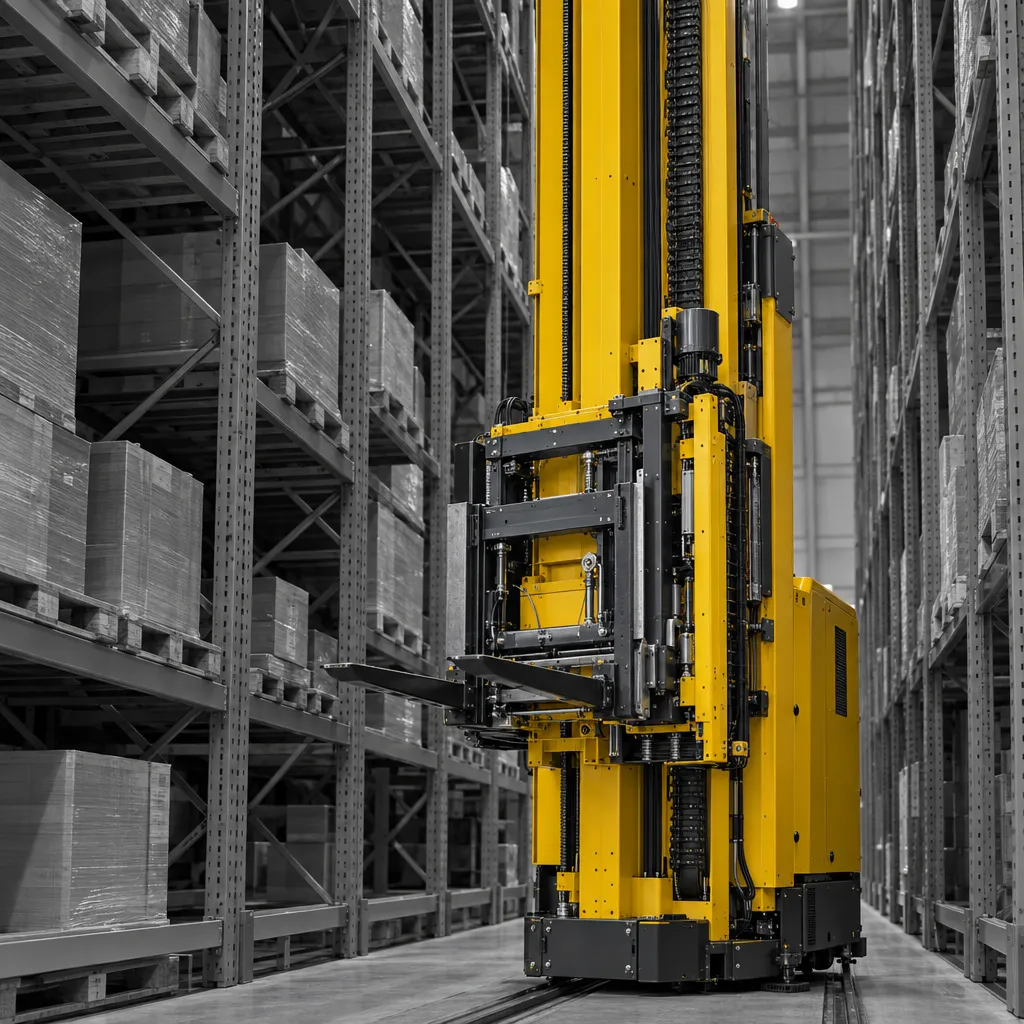
An automated storage and retrieval system puts product away and brings it back without a person driving the machine. A crane, shuttle or carousel runs a fixed path inside racking, and software decides what moves and when. Unit-load systems handle full pallets. Mini-load and AKL systems handle totes and cases for picking.
The reason to automate storage is density and accuracy, and the reason ASRS work is specialised is that the whole aisle stops when one machine does. There is no manual fallback for a crane aisle, so faults, cable and controls problems, and worn mechanical components are production problems from the first minute.
- Unit-load crane systems
- Mini-load and AKL
- Shuttle and carousel storage
02 / 07
Conveyor & Material Flow
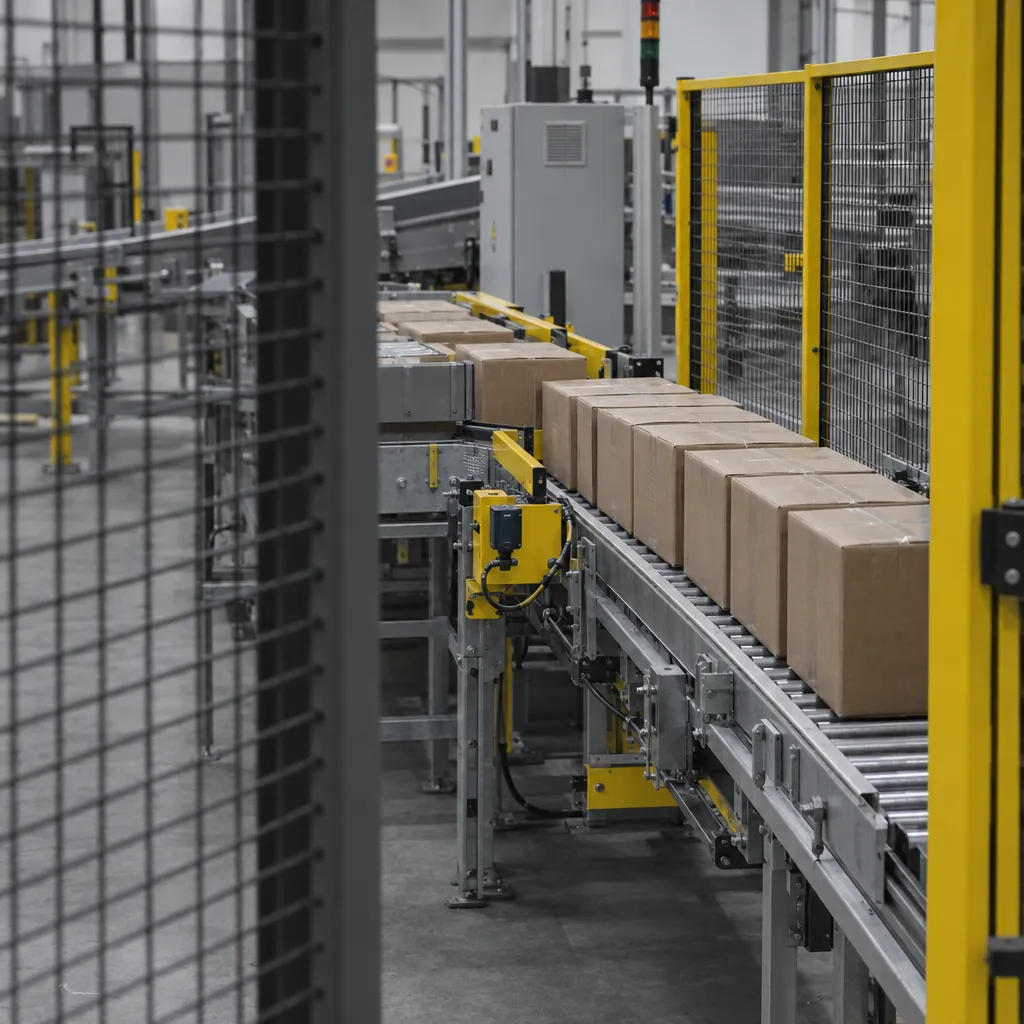
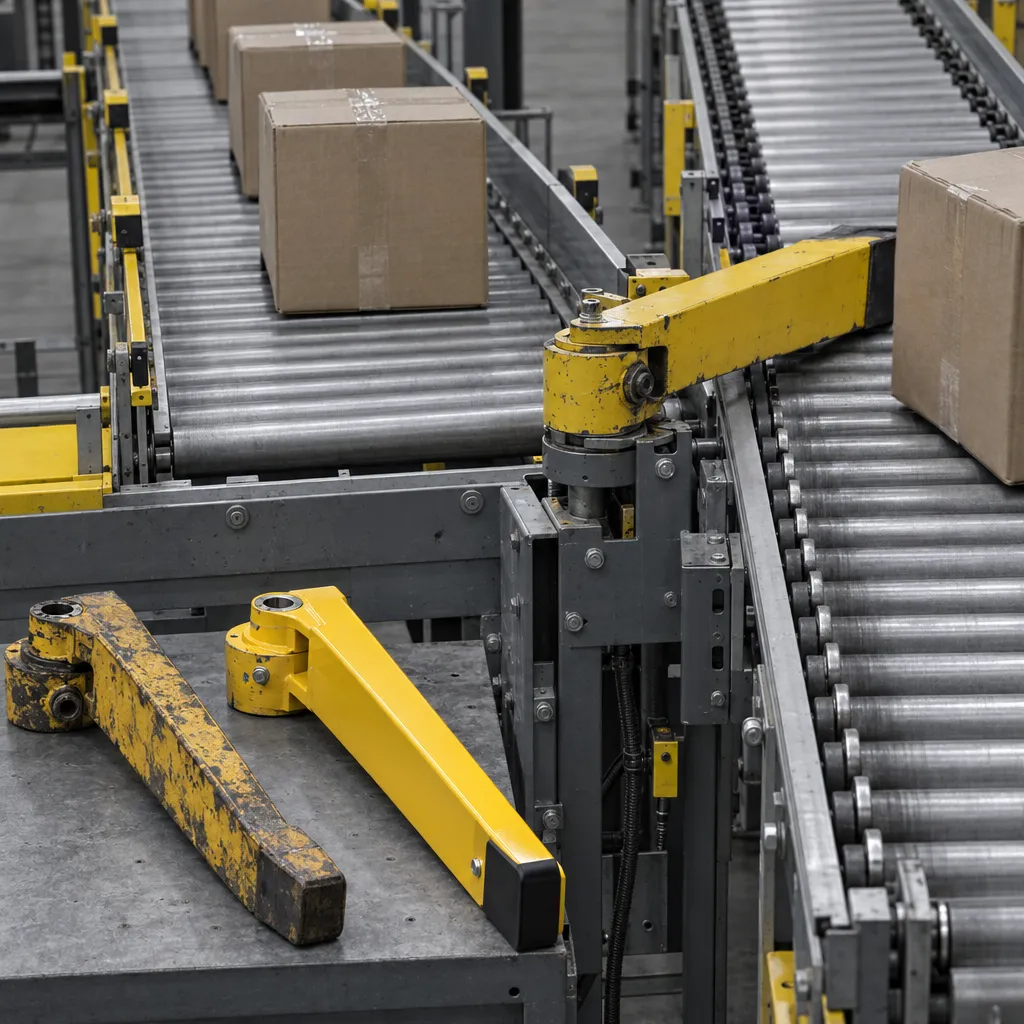
Conveyor is how product gets from one operation to the next, and the type is chosen by what is being moved. Belt handles loose and irregular loads. Roller and motor-driven roller handle cases and totes and can accumulate them without crushing. Chain and pallet conveyor carry unit loads. Diverts, merges and transfers are the junctions between them.
Material flow problems rarely start at the machine that stopped. A backup at shipping is usually caused upstream, and a line that runs at rate on paper can still lose hours a shift to jams at a single transfer point. Reading the flow matters more than replacing the component that failed last.
- Belt, roller and MDR conveyor
- Accumulation and transfers
- Diverts, merges and sortation feeds
03 / 07
Pallet Handling & End-of-Line
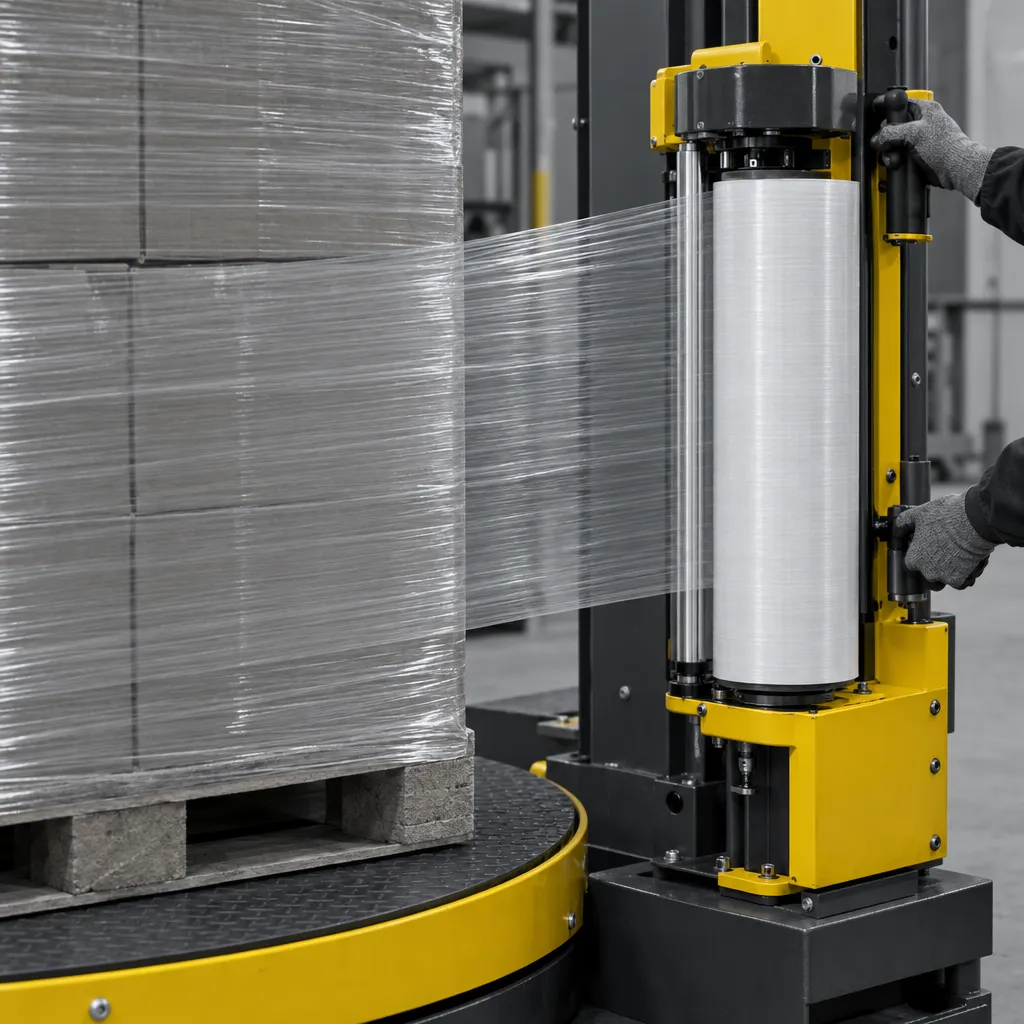
End-of-line is everything that happens once product is built into a load: palletizing, stretch wrapping, labelling, load transfer and pallet exchange. A pallet inverter turns a load to swap a damaged or non-conforming pallet underneath it. A load transfer system moves the load across without turning it, which matters when the product cannot be inverted.
This is the part of a facility with the least tolerance for downtime, because it sits between production and the dock with nowhere to buffer. When wrapping or palletizing stops, the floor fills within one shift and the trucks wait.
- Palletizing and depalletizing
- Stretch wrappers
- Pallet inverters and load transfer
- Pallet exchange and closed-loop handling
04 / 07
Robotics, Sortation & AGV/AMR
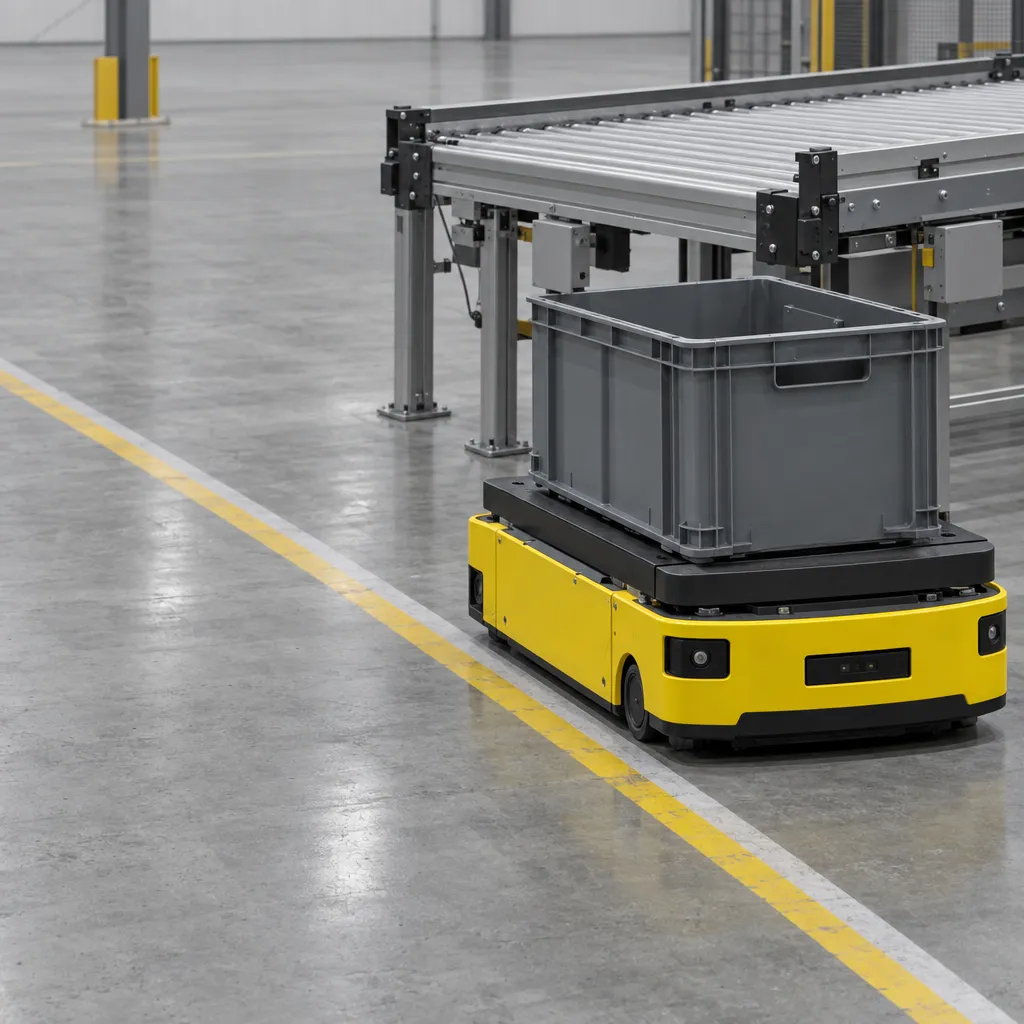
Sortation moves product to the right destination at speed, using shoe sorters, cross-belt or tilt-tray depending on the product and the rate. AGVs follow a fixed guided path. AMRs navigate a map and route around obstacles. Robotic cells handle picking, palletizing and machine tending.
The common failure with all of it is not the robot. It is integration. Automation bought as a standalone cell tends to run as an island, with product arriving and leaving by hand, and the throughput on the quote never appears because the handshakes to the equipment on either side were never built.
- Shoe, cross-belt and tilt-tray sortation
- AGV and AMR mobile automation
- Robotic picking and palletizing cells
05 / 07
Industrial Controls & Electrical
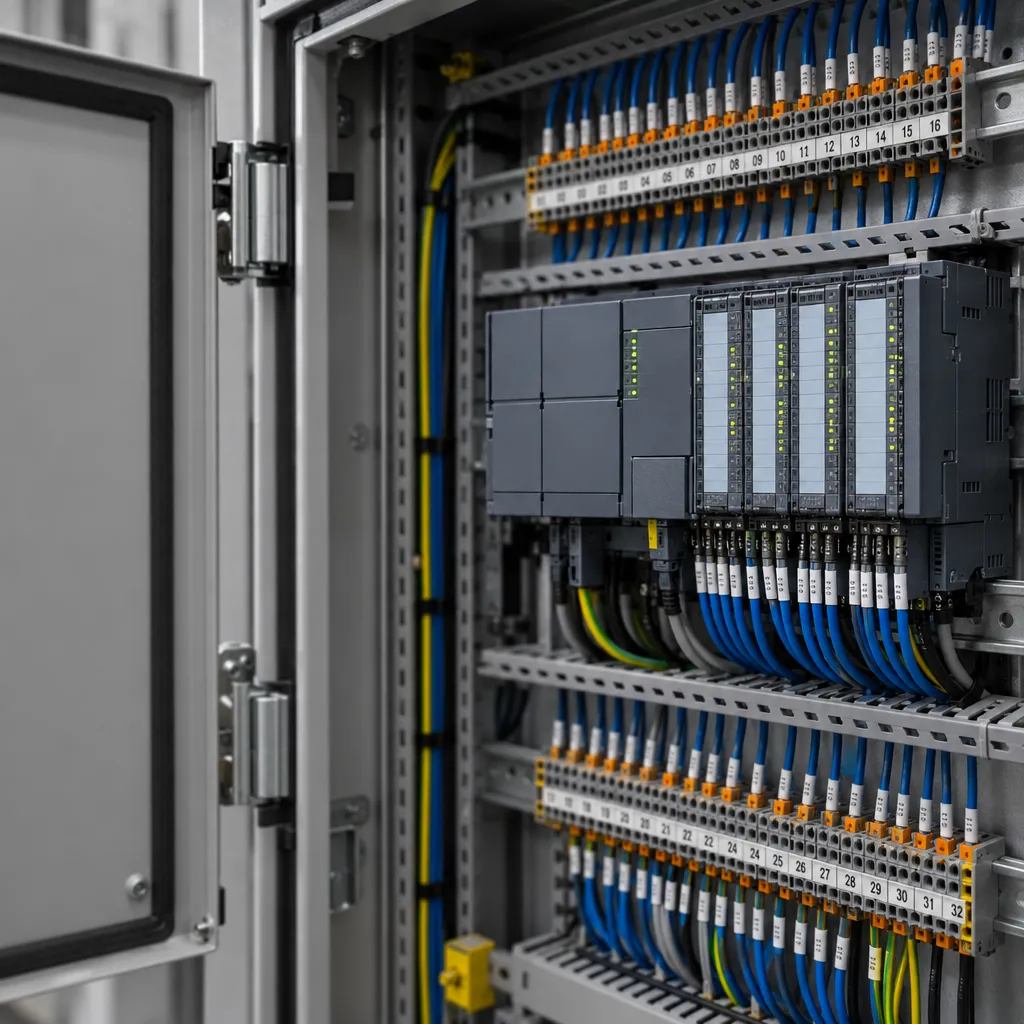
Controls are what turn a set of machines into a system. A PLC runs the logic, an HMI is where an operator sees and changes it, sensors and encoders report what is actually happening, and drives and starters move the motors. The panel and the field wiring are where all of it meets the building.
Controls work is where obsolescence bites first. A mechanical asset can run for thirty years, but the platform controlling it goes unsupported long before that, and the day a processor or drive fails on a system with no spares and no backup of the program is the day a plant discovers how much of its operation lived in one cabinet.
- PLC and HMI programming
- Control panels and terminations
- Sensors, drives and field devices
06 / 07
Machine Guarding, Safety & Access
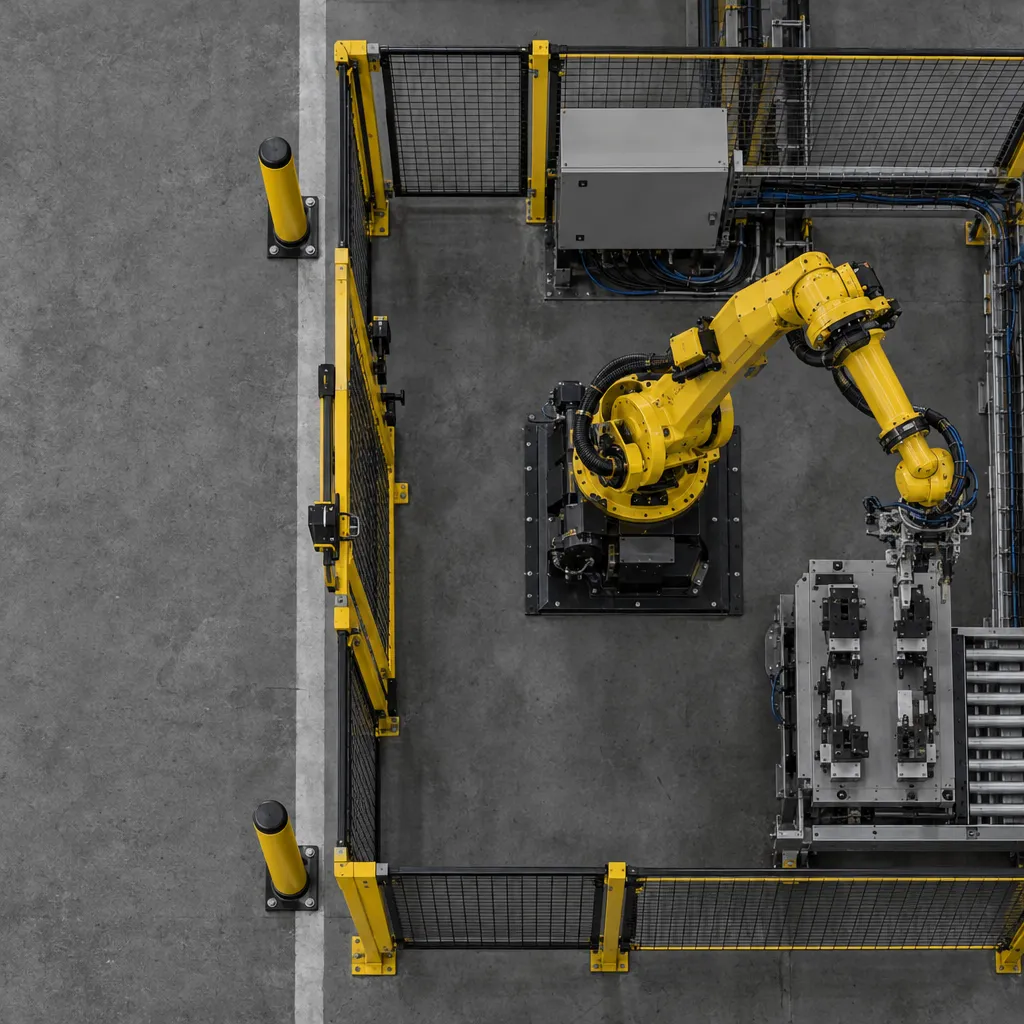
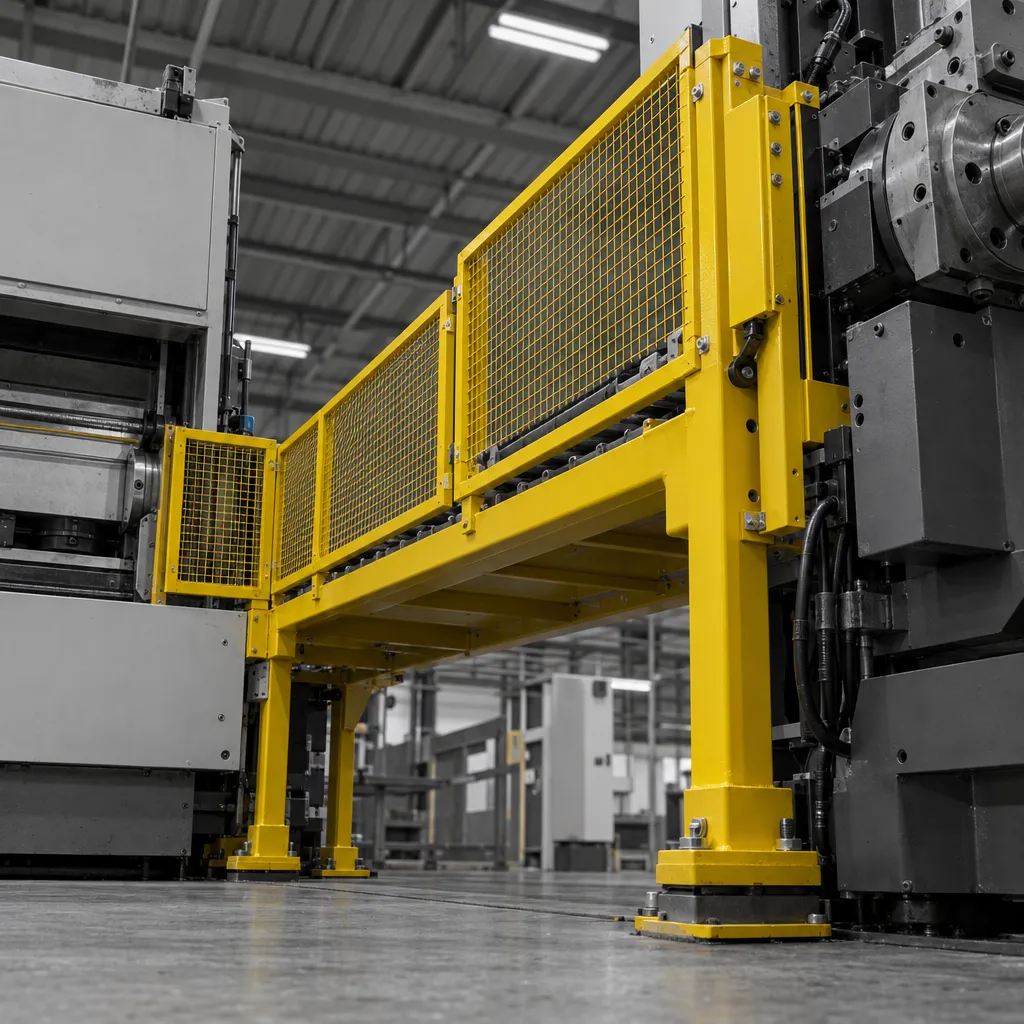
Guarding keeps people out of moving equipment and keeps equipment safe from traffic. It covers fixed fencing and barriers, machine enclosures, bollards protecting racking and panels from forklifts, and the platforms, handrails and stairs that give a technician a safe place to stand.
Off-the-shelf guarding is built for a machine in isolation, not for a machine in your building. Once a conveyor crosses an aisle, a panel sits where a truck turns, or maintenance needs daily access to a point three metres up, the standard package stops fitting and the guarding gets fabricated to suit or it gets removed.
- Fencing, barriers and enclosures
- Bollards and equipment protection
- Platforms, handrails and access
07 / 07
Custom Equipment & Engineered Systems
Custom equipment is what gets built when no catalogue machine fits the application. It runs from a modification to existing equipment, through a fabricated transfer, frame or fixture, to a complete engineered machine with its own controls.
Most custom work starts as a constraint rather than an ambition. A product does not suit a standard machine, a footprint will not take one, or two systems that were never designed to meet each other now have to. The question is whether the answer is designed once and built to fit, or worked around every shift.
- Equipment modifications
- Fabricated transfers and frames
- Engineered machines with controls
Next step
Bring the Problem to Steel Square
Discuss a defined project, or ask for a facility audit for a broader look at the operation.