
Service & Support
Industrial Equipment Service & Lifecycle Support
Steel Square supports equipment after installation and as it ages. The service side of the business includes repair, troubleshooting, preventive maintenance, parts, modernization, legacy-equipment support and after-hours breakdown work.
What brings you here
Equipment Failure, Repeat Faults & Obsolescence
- Equipment is down, damaged or unreliable
- A recurring maintenance burden or repeat failures
- Aging or obsolete equipment is hard to support
- You need parts or a replacement component
- A system is worth modernizing, not replacing
01 / 06
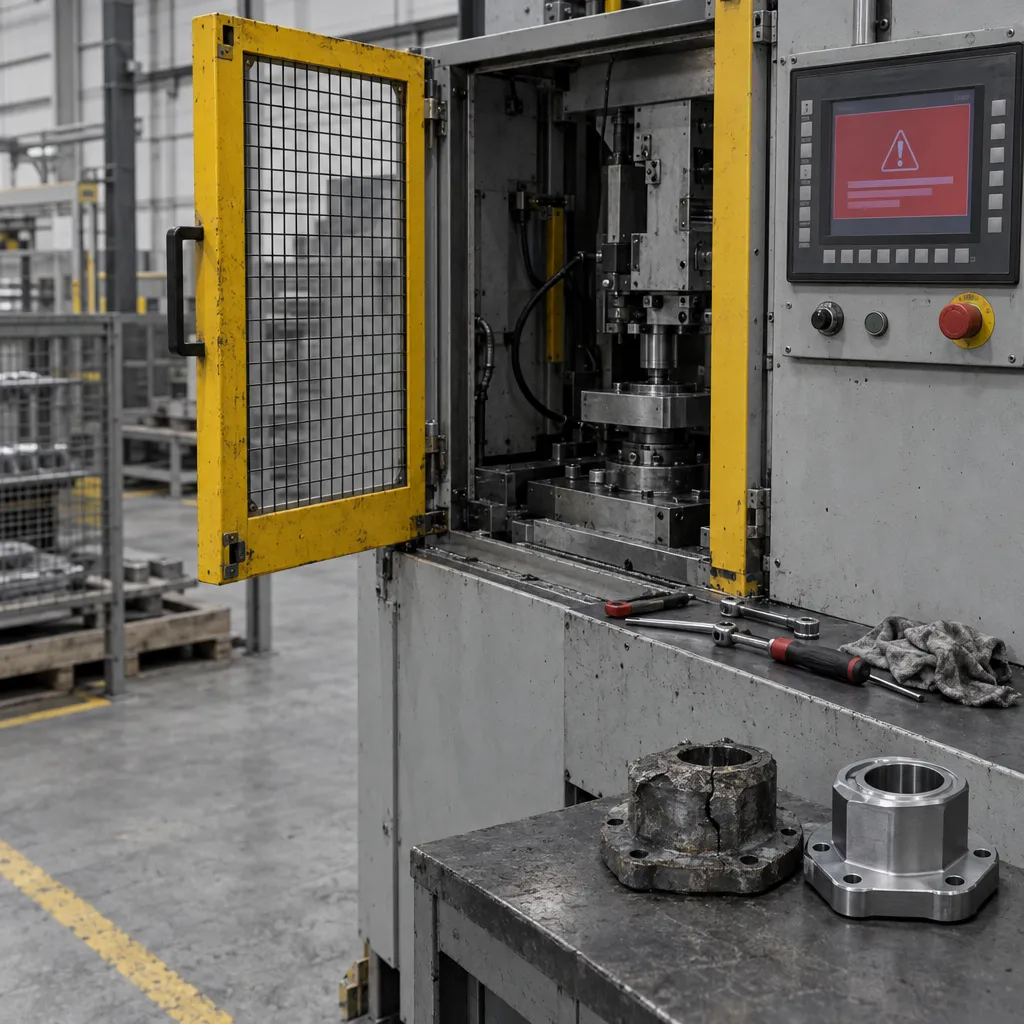
Repair & Troubleshooting
Troubleshooting is finding the actual cause. Repair is the corrective work that follows. On automated equipment the two are rarely one trade, because a stoppage can be mechanical, electrical, controls or a sensor reading a condition that is genuinely there.
The expensive pattern is a component swapped because it was the thing that failed, when it failed because of something else. A bearing that goes twice in a year is an alignment problem. A photo eye replaced monthly is a mounting or a product problem. A repair that does not name a cause is a repair that gets repeated.
- Fault diagnosis across trades
- Mechanical and electrical corrective work
- Controls and sensor faults
- Return to service
02 / 06
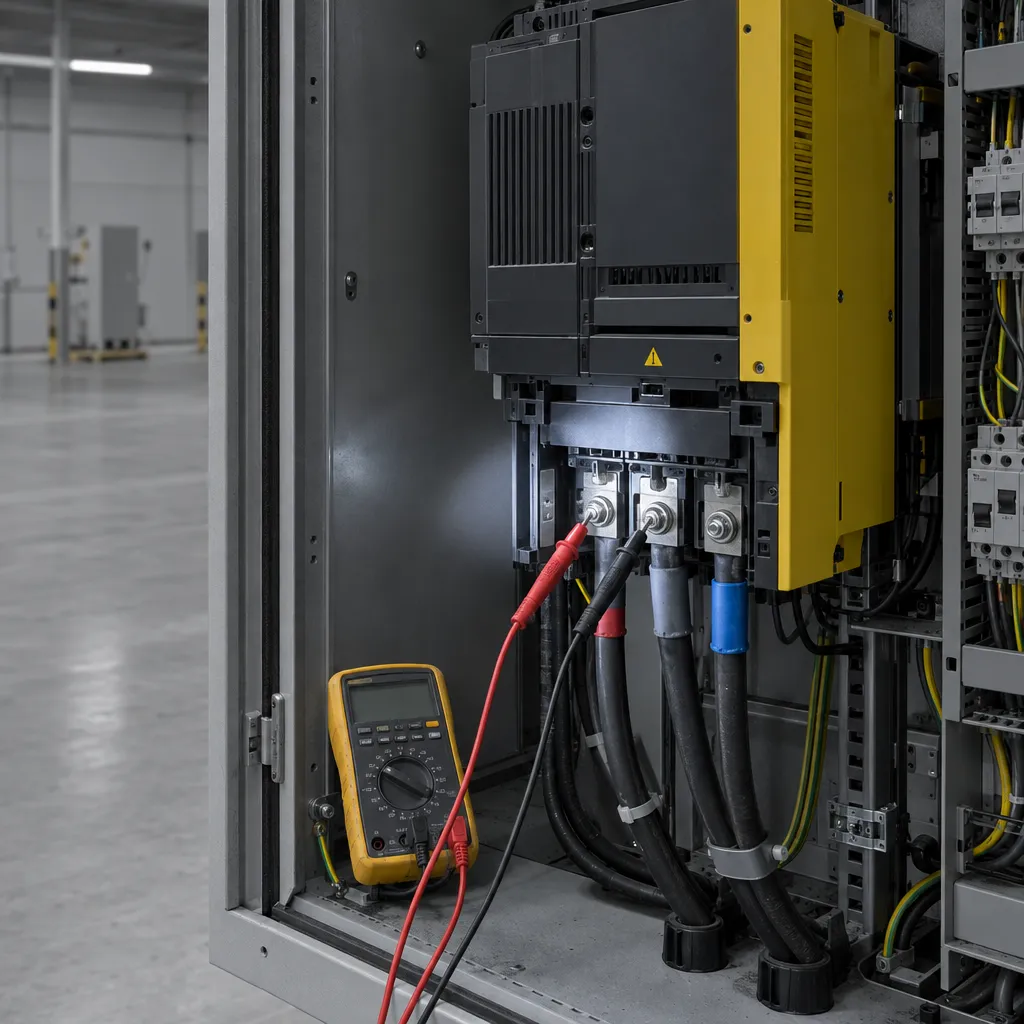
Preventive Maintenance
Preventive maintenance is scheduled work done while equipment is still running: inspection, lubrication, wear-part replacement, adjustment and the condition checks that catch a failure while it is still cheap.
The argument for it is not that machines last longer, though they do. It is that the work happens in a window you chose rather than one production chose for you. A wear part replaced on a planned Sunday and the same part replaced mid-shift on a Wednesday cost different amounts, and the difference is not the part.
- Scheduled inspection and service
- Wear-part replacement
- Lubrication and adjustment
- Work planned around production
03 / 06
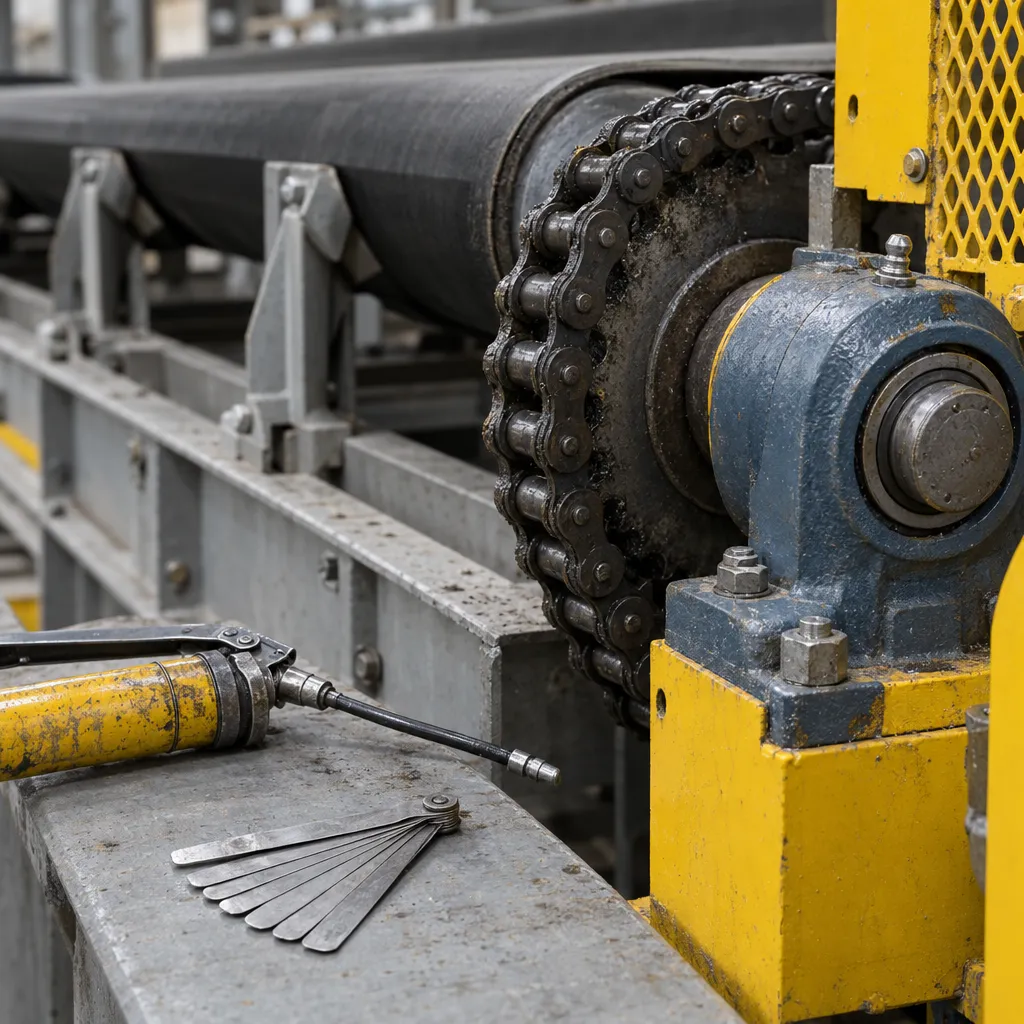
Equipment & Parts Supply
Parts supply covers sourcing components for equipment already installed, including parts for systems whose original supplier has moved on, changed the part number or stopped making it. It also covers sourcing replacement equipment when repair is no longer the right answer.
Lead time is the real problem, not price. A component with a sixteen-week lead time on a machine with no spare is a sixteen-week exposure, and the facilities that feel this hardest are the ones running well-built older equipment that has outlived its supply chain.
- Hard-to-find and obsolete parts
- Cross-referencing and substitutes
- Replacement equipment sourcing
- Spares for installed systems
04 / 06
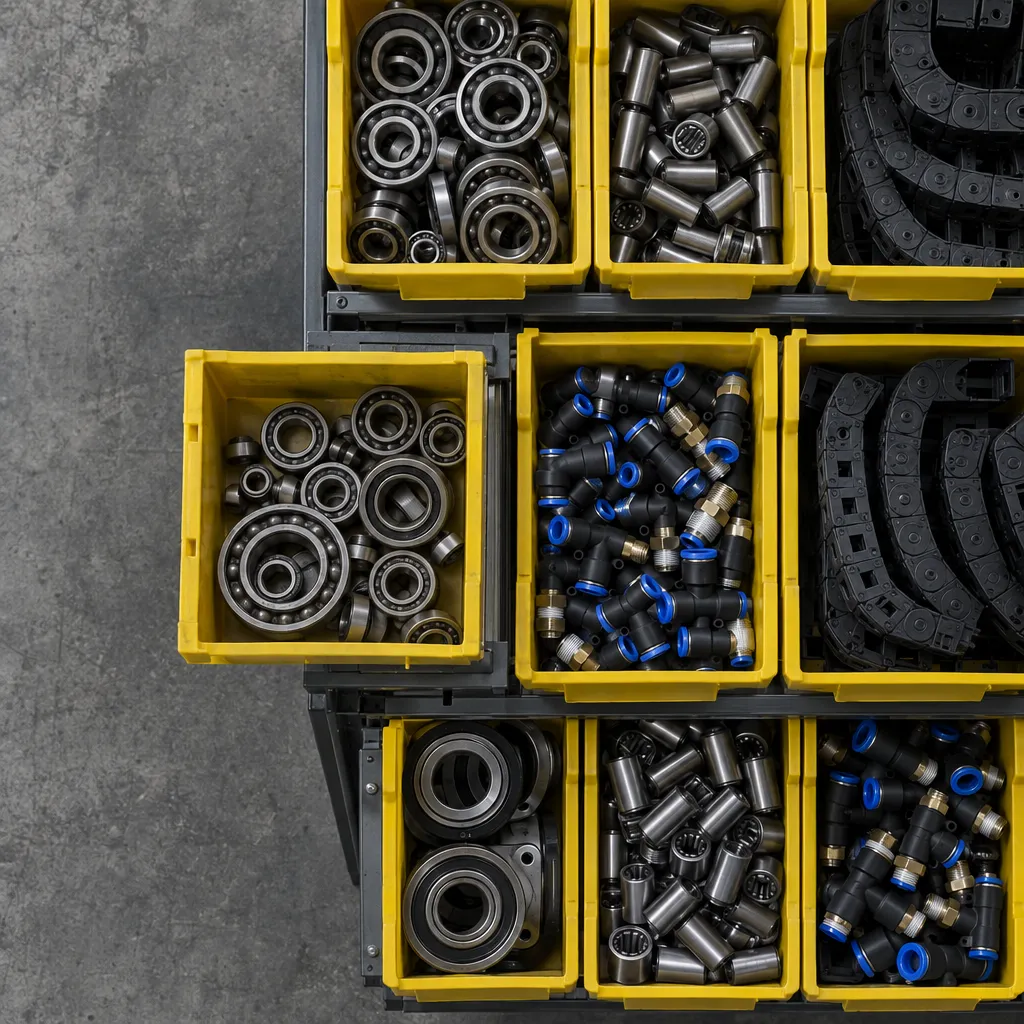
Modernization & Retrofits
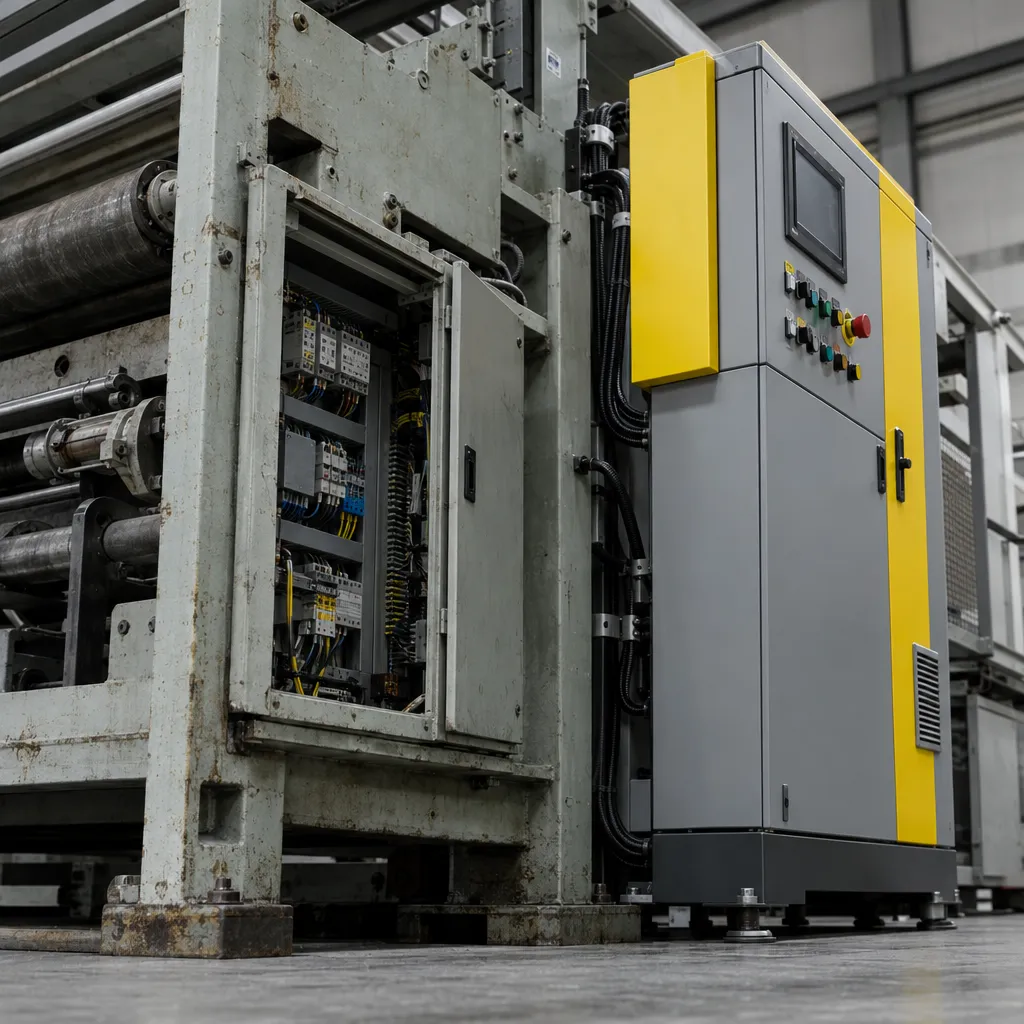
A retrofit keeps the mechanical asset and replaces what has aged out around it: the controls platform, the drives, the sensors, the safety circuit. Modernization is the same idea at a larger scale, bringing an installed system up to a supportable standard without replacing it.
The case for it is that the two halves of a machine age at different rates. A well-built frame, gearbox and drivetrain can run for decades, while the platform controlling them goes unsupported in ten or fifteen years. Replacing the whole machine to fix the half that expired is often the more expensive option.
- Controls platform replacement
- Drive and sensor upgrades
- Safety circuit updates
- Capability added to existing equipment
05 / 06
Aging / Obsolete Equipment
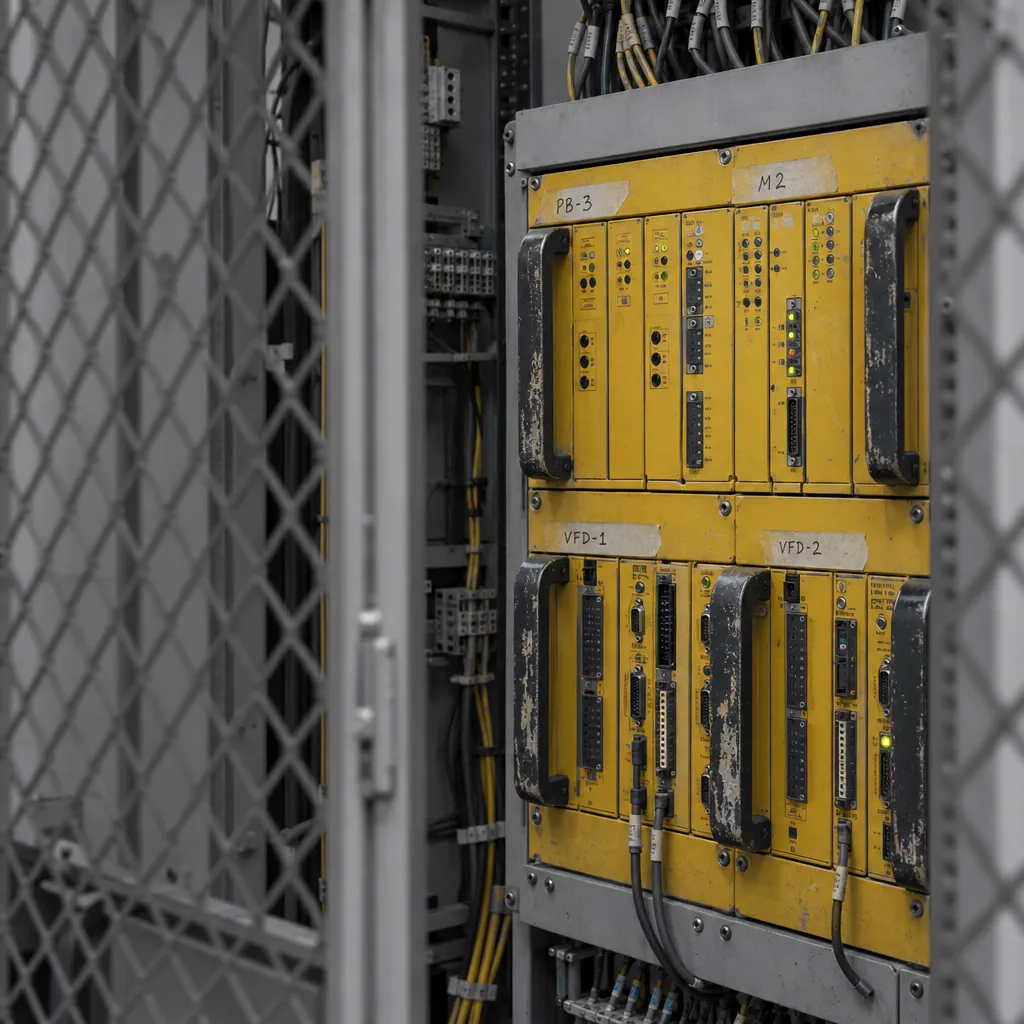
Obsolescence is a supply problem before it is a performance problem. The equipment still works. What has gone is the support: the OEM has exited, the parts are discontinued, the controls predate anyone currently on site, and the program may exist only on the processor running it.
The risk is concentrated rather than gradual. An obsolete system runs fine until one component fails, and then the recovery time is not a repair time, it is a sourcing time. The decision worth making early is whether to stock the critical spares, retrofit the part that expired, or plan the path off the system while it is still running.
- Support for unsupported systems
- Critical spares strategy
- Program and documentation recovery
- Planned path off end-of-life equipment
06 / 06
Emergency / After-Hours Support
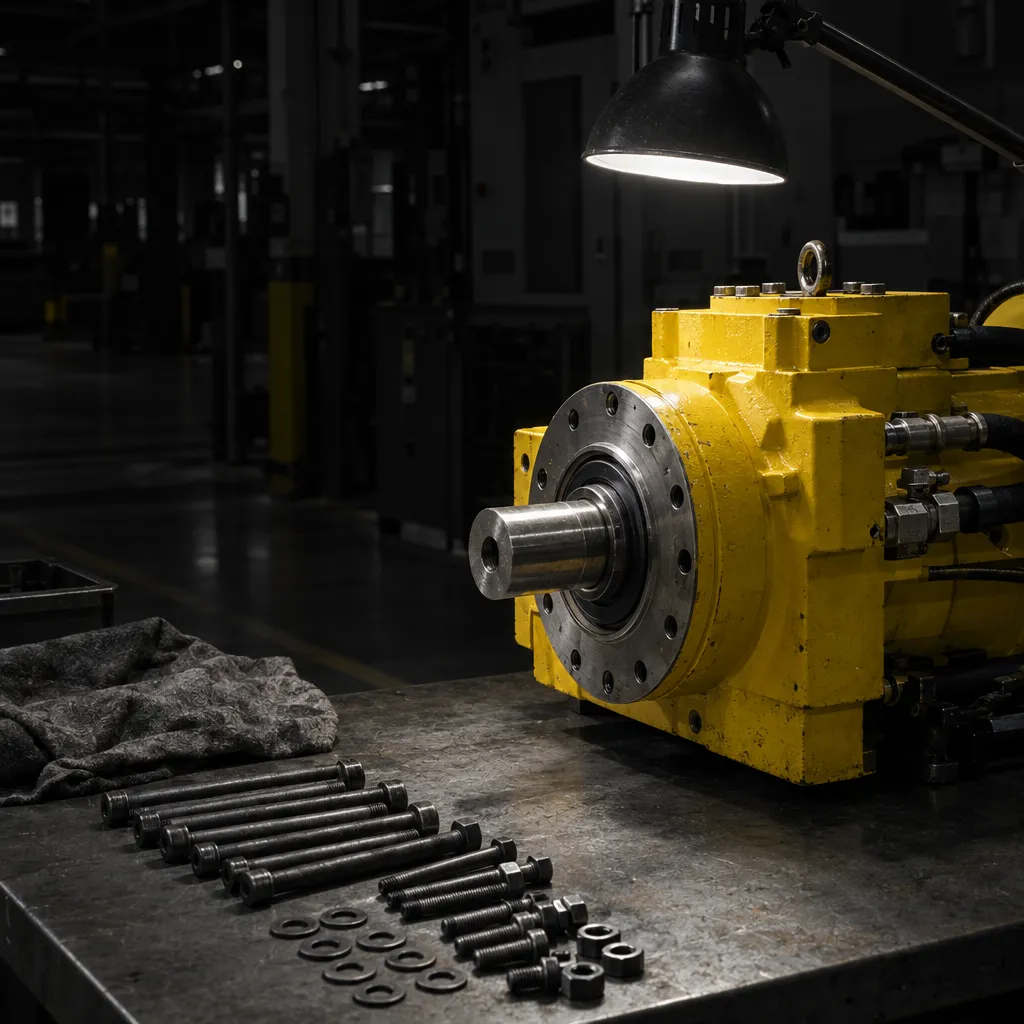
Emergency support is response to a failure that cannot wait for a scheduled visit, including outside normal hours. The scope is whatever the restart actually needs: mechanical, controls, electrical or fabrication, on equipment Steel Square may not have installed.
What matters in the first call is information, not paperwork. The equipment, the location and what it is doing right now determine whether this is a part, a program or a person on site, and you do not need a history with Steel Square to make that call. Availability is confirmed while you are on the line.
- Response outside normal hours
- Diagnosis across trades on site
- Return-to-service work
- No prior relationship required
Next step
Equipment down or unreliable?
Send the equipment, facility location and current condition, or ask for a facility audit for a broader look at the operation.